Scheduled for scrapping — restored to service
A babbitted bearing with a 2000 mm bore and a weight of 4.5 t came to us with a worn, damaged white-metal layer and cracks in the body. It was due to be written off. We restored it in five steps and returned it to working condition — at a fraction of the cost of a new part.
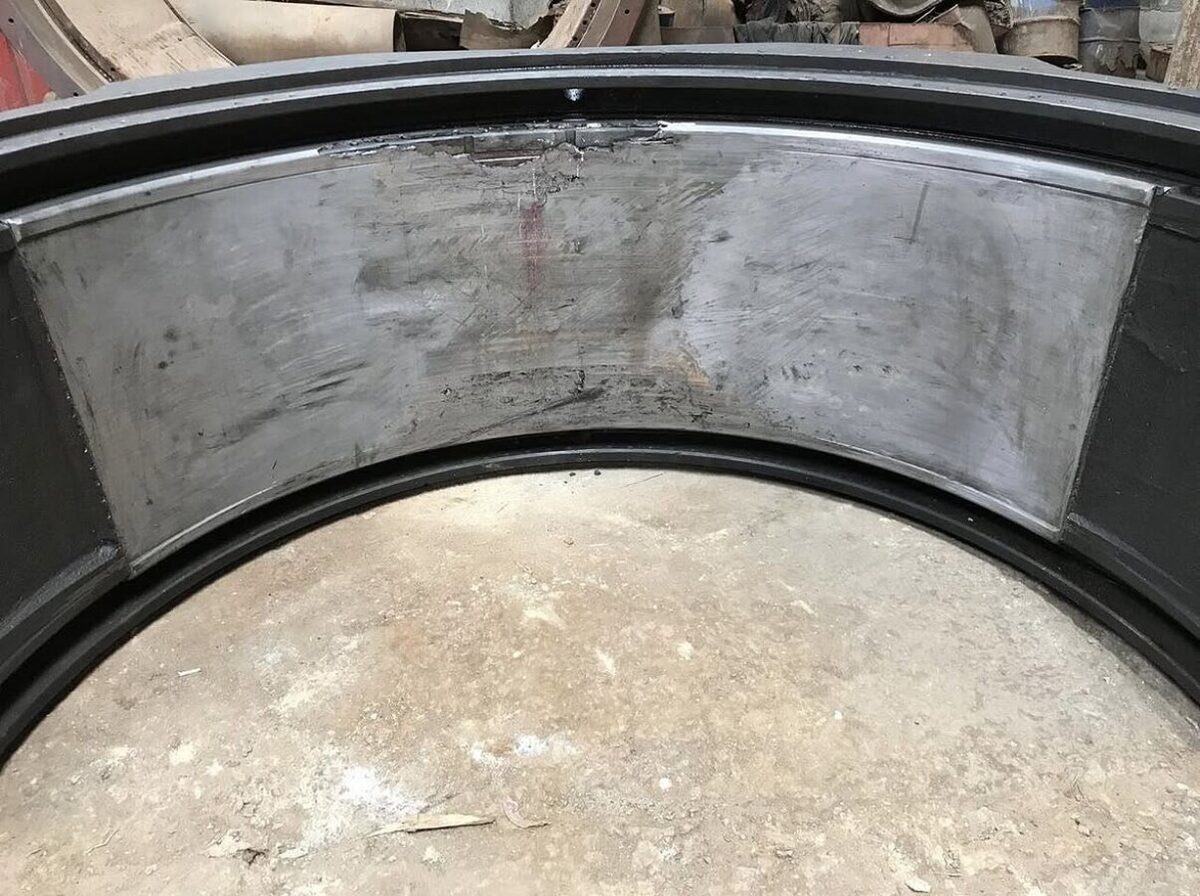
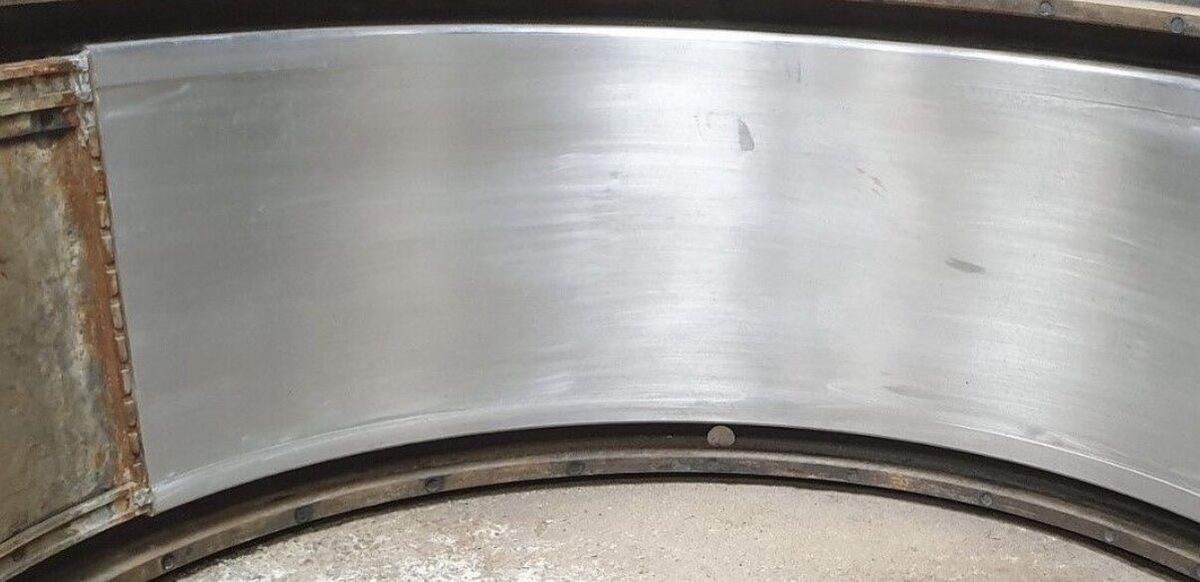
How the repair went
-
01
Incoming inspection
Incoming control and preparation for the start of work.
-
02
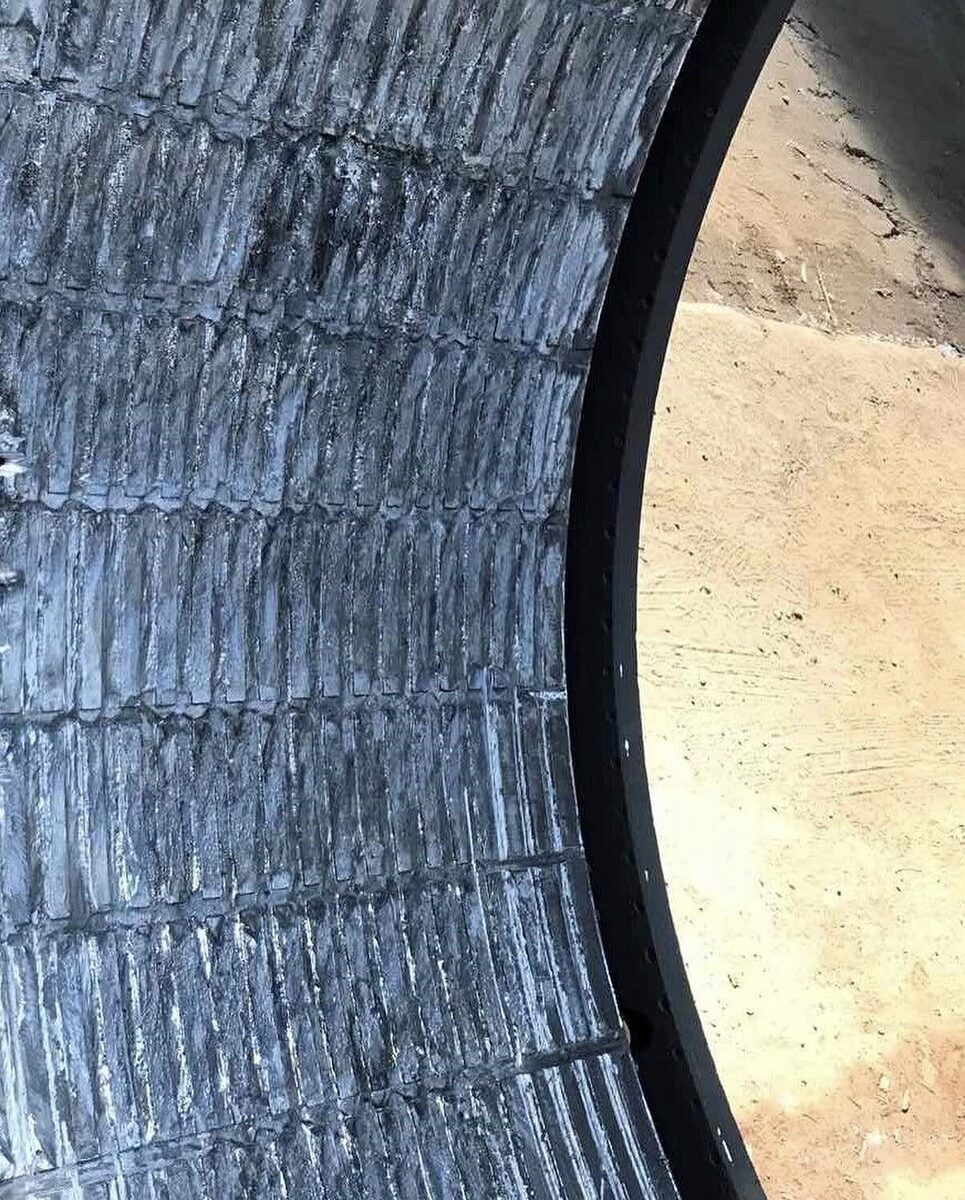
Old babbitt removed
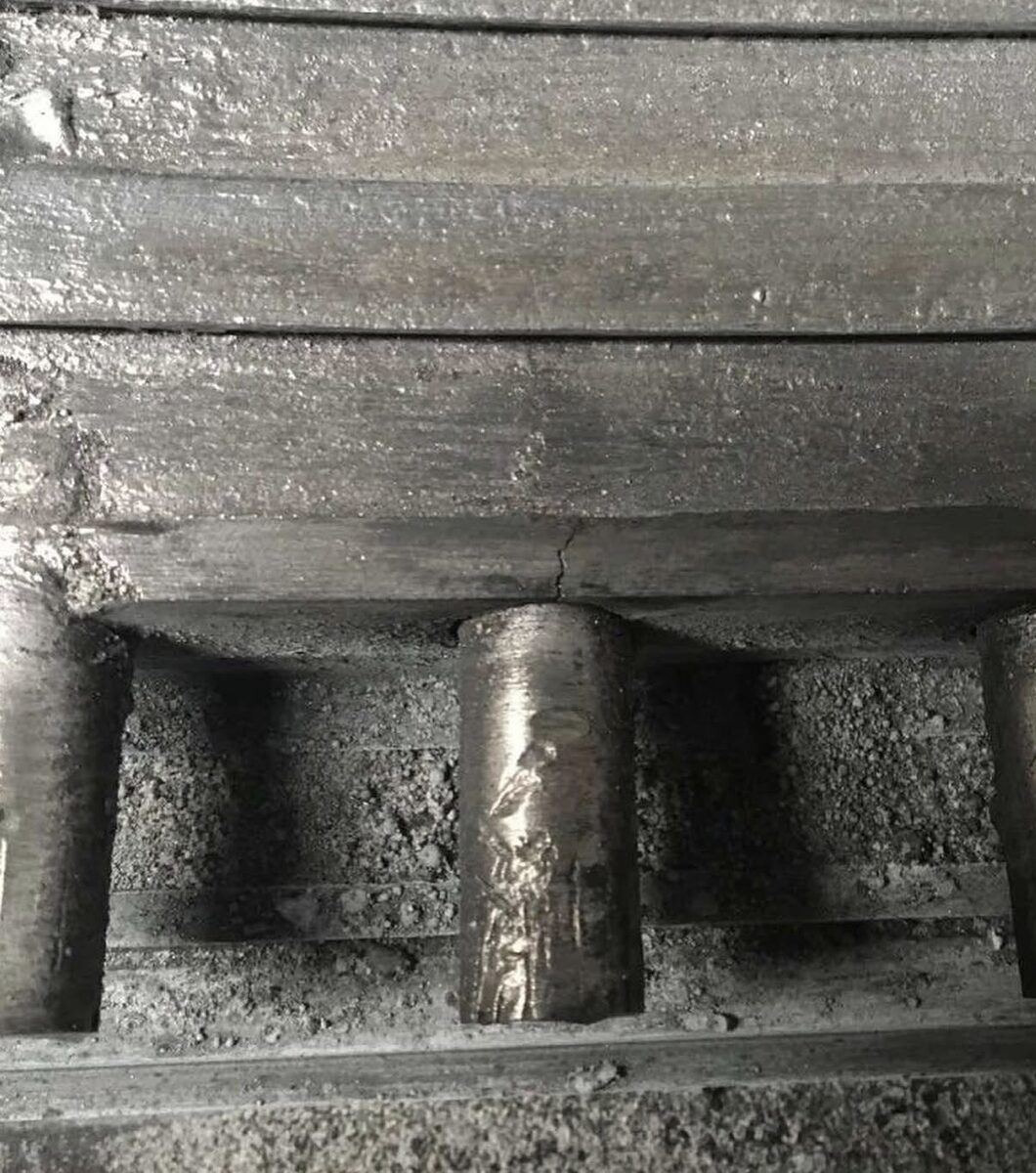
We remove the old babbitt layer and evaluate the full scope of the work — cracks in the lining and the condition of the anchoring.
-
03
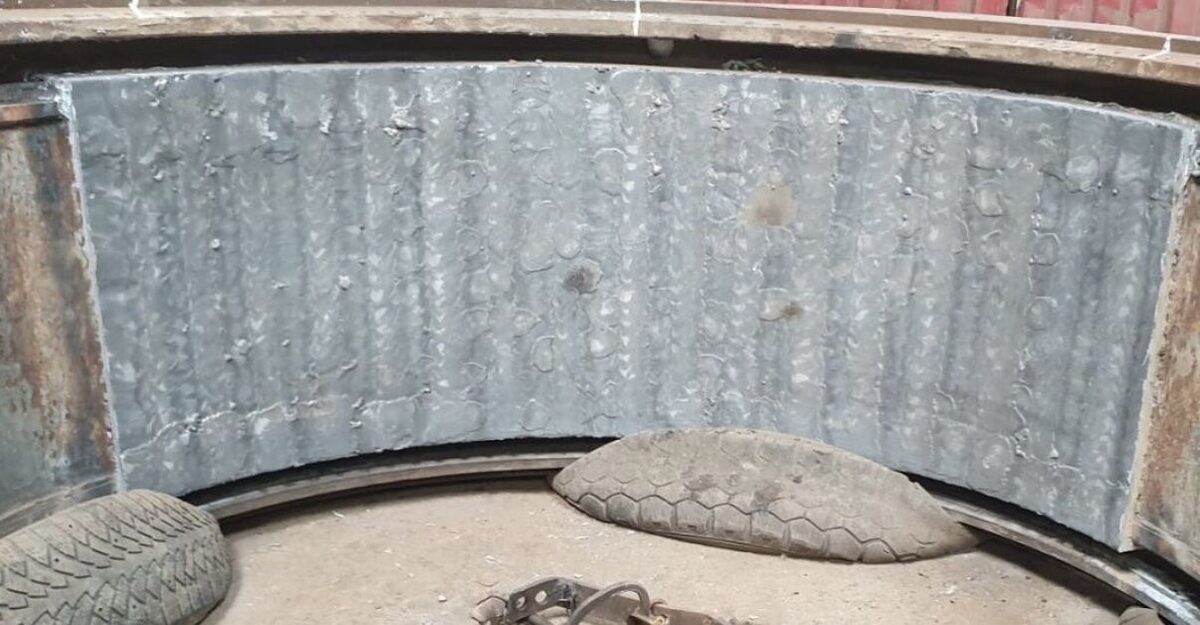
Cleaning, crack repair, new babbitt
Complete cleaning of the part from dirt and oil residues, repair of cracks in the body and application of a new babbitt layer.
-
04
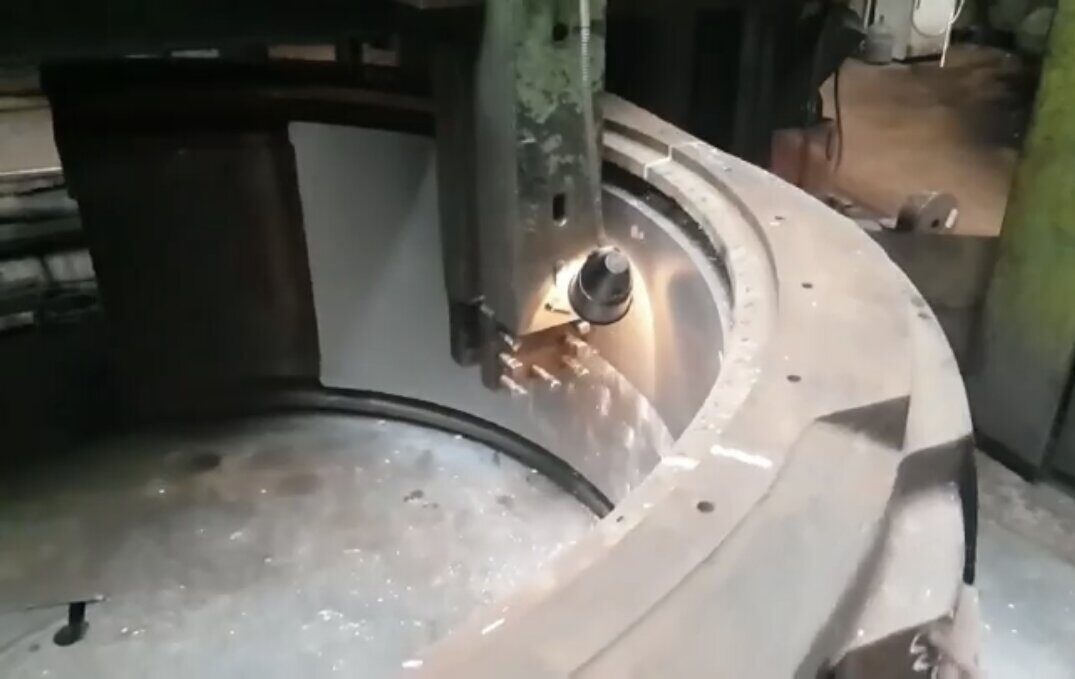
Machining
Machining of the new babbitt layer on a vertical lathe.
-
05
Result
The bearing is finished and ready to go back into service.
Result
This part should already have been scrapped, but we were able to restore it to working condition. The customer was satisfied with the quality of the work and the money saved compared with buying a new part.
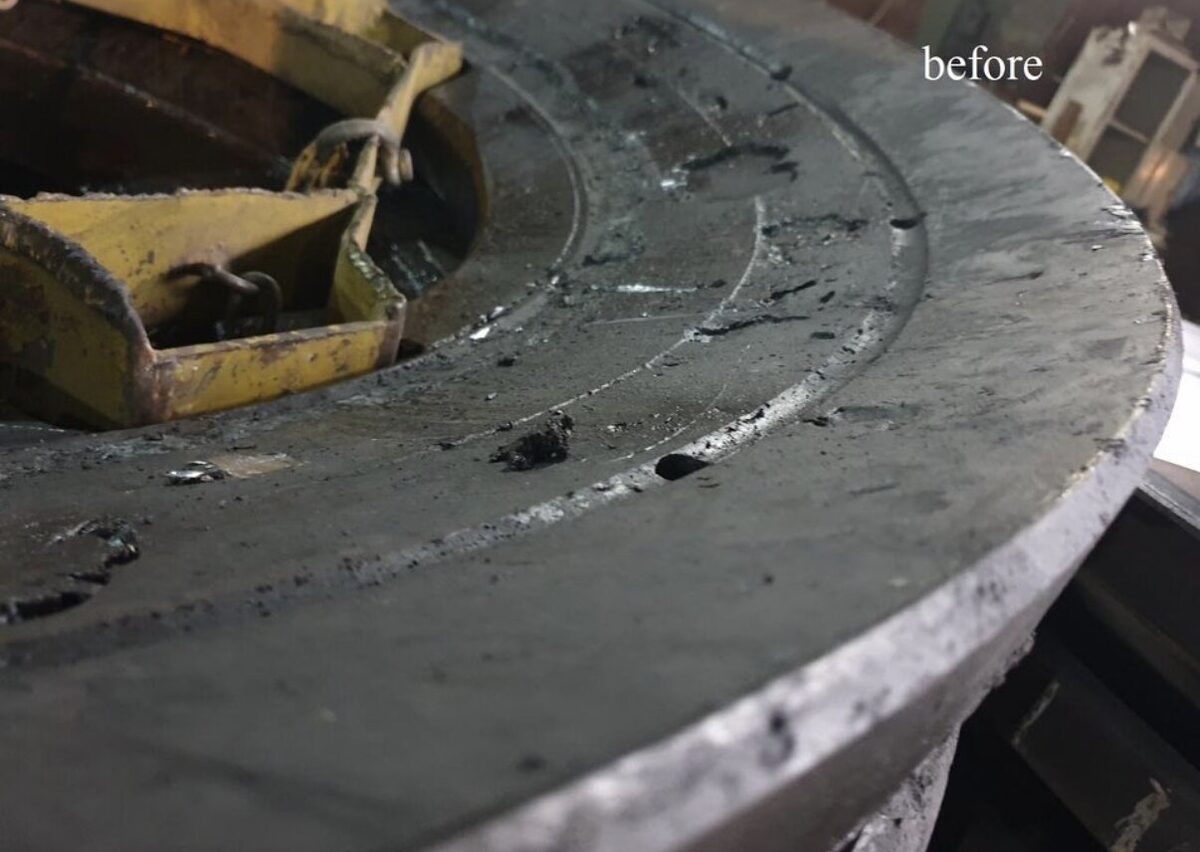
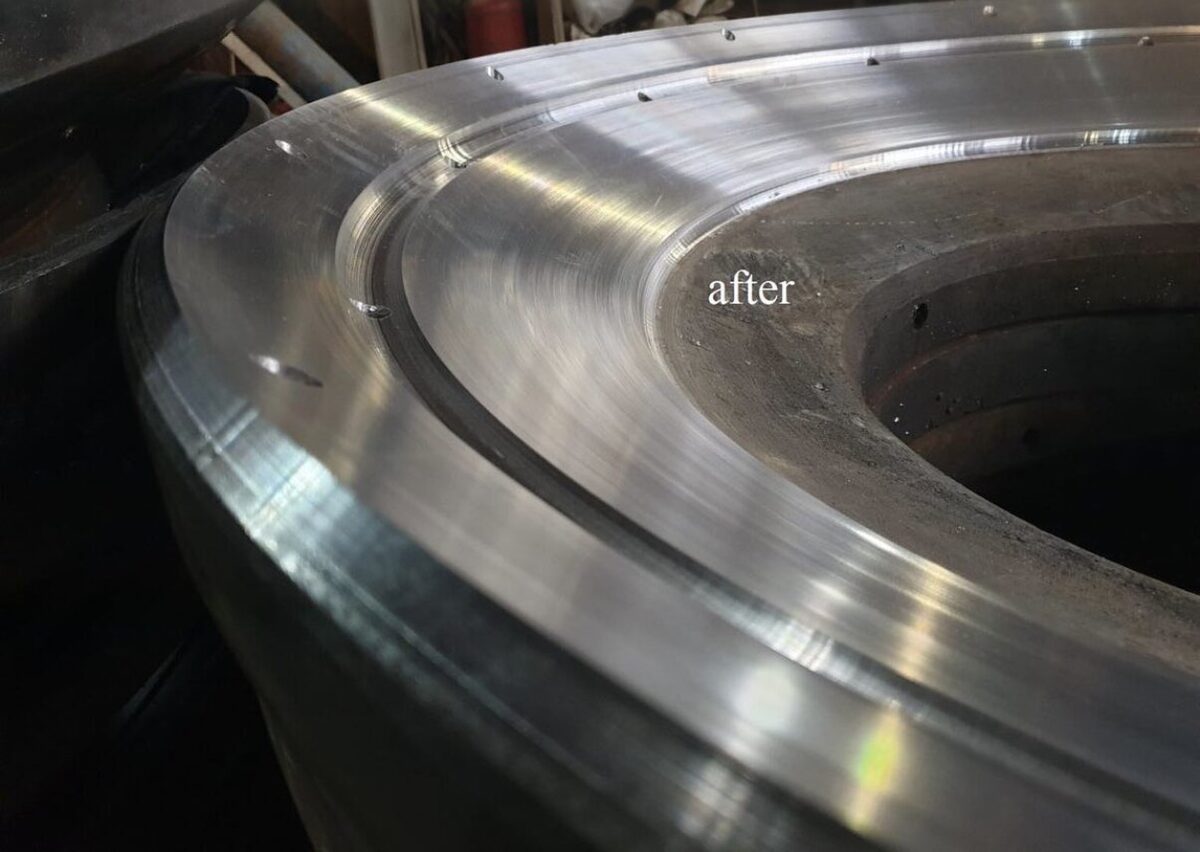
Another example: before and after
Worn babbitt with a dull, damaged surface — and the same part after re-babbitting and machining. In most cases such parts are repaired rather than replaced, at 20–30% of the cost of new ones.
Have a bearing marked for scrap? Send us a photo — we reply within 48 hours.
Request a quote